
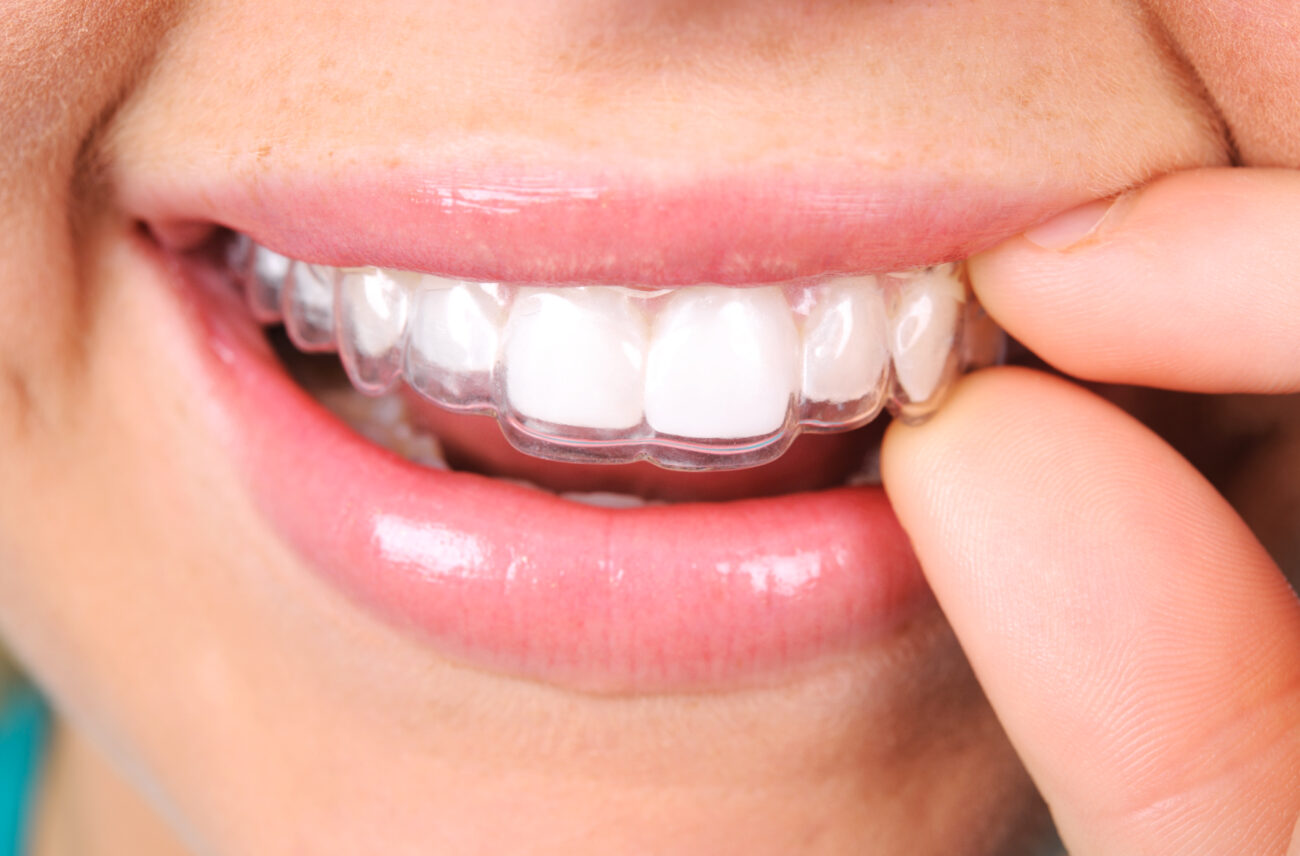
Straightening crowded teeth can improve the appearance of your smile, make teeth easier to clean, and help create a more balanced bite. Clear aligners are a popular option for adults who want to improve their tooth alignment without traditional braces. However, not every orthodontic concern can be addressed with clear aligners alone.
At Gunbarrel Dental Center, Dr. Rachel Barone offers Spark Aligners for appropriate cases, particularly smaller alignment concerns such as cosmetic crowding of the lower front teeth. Before recommending treatment, she begins with an orthodontic consultation to understand your goals, evaluate your teeth and bite, and discuss the options available to you.
Sometimes, a patient comes in primarily interested in straightening a few crowded teeth, but the conversation reveals broader concerns about their bite, jaw development, or breathing during sleep. In these situations, Dr. Barone may recommend exploring treatment with an orthodontist who can evaluate options such as arch expansion, braces, or a combination of orthodontic approaches.
Our goal is not simply to straighten teeth. It is to help you understand your options and make an informed decision about the approach that best fits your individual needs.
What Causes Crowded Teeth?
Crowding occurs when there is insufficient space for teeth to align comfortably within the dental arch. As a result, teeth may overlap, twist, or sit farther forward or backward than expected.
Several factors can contribute to crowding, including:
- Genetics: The size and shape of your jaws and teeth are largely influenced by inherited characteristics.
- Jaw development: The width and shape of the dental arches can affect how much room is available for the teeth.
- Early childhood habits: Certain prolonged oral habits may influence how the teeth and jaws develop.
- Tooth loss or changes in tooth position: Losing teeth prematurely or changes in the position of neighboring teeth can affect alignment.
- Natural changes over time: Teeth can gradually shift throughout adulthood, particularly if retainers are not worn consistently after orthodontic treatment.
Crowding is especially common in the lower front teeth. Some patients notice that their lower incisors gradually become more crooked with age, even if they previously had braces.
For patients with mild lower anterior crowding, Spark Aligners may be an appropriate option. However, the appearance of crowded teeth does not always tell the whole story. Understanding why the crowding developed and how the teeth fit together is an important part of determining the right treatment.
How Is Crowding Different From Other Orthodontic Problems?
Crowding is only one type of alignment concern. Other issues may involve the relationship between the upper and lower teeth, the size and position of the jaws, or the development of the dental arches.
Common orthodontic concerns include:
- Crowding: Teeth overlap or rotate because there is insufficient room for proper alignment.
- Spacing: Gaps exist between teeth.
- Overbite: The upper front teeth overlap the lower front teeth vertically.
- Underbite: The lower teeth sit in front of the upper teeth.
- Crossbite: One or more upper teeth sit inside the lower teeth when biting together.
- Open bite: Certain upper and lower teeth do not meet when the mouth closes.
- Skeletal discrepancies: The upper and lower jaws differ in size, position, or relationship to one another.
These distinctions matter because moving teeth into a straighter position does not necessarily address the underlying cause of an orthodontic problem.
For example, a patient may have crowded front teeth but also have a narrow upper dental arch or a significant discrepancy between the upper and lower jaws. Aligners may improve the appearance of the teeth, but additional orthodontic evaluation may be needed to determine whether a broader treatment approach would better address the patient’s goals.
That is why Dr. Barone evaluates the overall bite and dental anatomy rather than focusing exclusively on the teeth that appear crooked.
Can Spark Aligners Fix Crowded Teeth?
Yes. Spark Aligners can be an effective option for appropriate cases of dental crowding, particularly when the required tooth movements are relatively limited and predictable.
At Gunbarrel Dental Center, Dr. Barone typically treats smaller alignment cases, often involving cosmetic concerns such as mild crowding of the lower front teeth. These cases may be well suited to clear aligner treatment when the patient’s bite, tooth position, and overall oral health support that approach.
However, the suitability of Spark Aligners depends on more than the degree of crowding alone. The amount of available space, the position of the roots, the relationship between the upper and lower teeth, and the patient’s broader orthodontic needs all influence treatment planning.
Some patients may benefit from a limited course of aligners. Others may need comprehensive orthodontic treatment, potentially involving an orthodontist, to address concerns beyond the position of individual teeth.
The best way to determine whether Spark Aligners are appropriate is through an individualized consultation.
Why Does Dr. Barone Start With an Orthodontic Consultation?
Many patients initially seek orthodontic treatment because they want straighter teeth or a more attractive smile. Those are valid goals, and in some cases, a relatively small amount of tooth movement may be all that is needed.
However, during a consultation, Dr. Barone also considers what the patient hopes to accomplish beyond appearance.
For example, a patient who asks about straightening their lower front teeth may also have questions about their bite, limited space within the dental arches, or concerns related to sleep and breathing. These additional considerations can influence which treatment options are worth exploring.
During an orthodontic consultation, Dr. Barone can discuss:
- Your primary concerns and desired results.
- The position of your teeth and how your bite comes together.
- The shape and available space within your dental arches.
- Whether your concerns appear to involve tooth position, jaw relationships, or both.
- Whether a limited course of Spark Aligners may be appropriate.
- Whether a consultation with an orthodontist could provide additional options.
- Relevant airway or sleep-related concerns that may warrant further evaluation.
This conversation helps us determine whether the treatment offered at our office is a good fit or whether a different approach may better serve your needs.
We believe patients should understand their options before committing to treatment. Sometimes, the best recommendation is to proceed with Spark Aligners at our office. Other times, it may be worthwhile to explore a more comprehensive orthodontic plan with a specialist.
When Might Working With an Orthodontist Be a Better Option?
Dr. Barone offers Spark Aligners for appropriate cases, but she also recognizes when a patient’s goals or anatomy may call for a broader orthodontic evaluation.
An orthodontist can assess more complex tooth movements, jaw relationships, and treatment options that may not be addressed by a limited course of clear aligners.
Depending on the individual situation, treatment may involve traditional braces, comprehensive clear aligner therapy, arch expansion, or a combination of approaches.
Understanding Arch Expansion
The dental arches are the curved structures formed by the upper and lower teeth. Their width, shape, and relationship to the jaws influence how teeth fit together and how much room is available for alignment.
Some patients have narrow dental arches or limited space that contributes to crowding. In selected cases, an orthodontist may consider an expansion approach as part of a broader treatment plan.
One option that may be discussed in appropriate patients is MARPE, or miniscrew-assisted rapid palatal expansion. This technique uses a specialized expansion appliance supported by small anchorage screws to help widen the upper jaw in selected patients, particularly when conventional expansion may be less suitable.
MARPE is not necessary or appropriate for everyone. Whether it is an option depends on factors such as skeletal maturity, anatomy, the nature of the discrepancy, and the patient’s overall treatment goals.
An orthodontist can evaluate whether expansion is indicated and discuss its potential benefits, limitations, risks, and alternatives. Depending on the case, expansion may be combined with braces or clear aligners to address both the underlying arch discrepancy and the position of individual teeth.
Why Does the Difference Between Tooth Movement and Jaw Expansion Matter?
Clear aligners primarily move teeth within the supporting bone. Although aligner treatment can create space and improve certain aspects of arch form, it is not equivalent to skeletal expansion of the upper jaw.
When a patient has a significant skeletal discrepancy or a narrow upper jaw, simply straightening the teeth may not address every aspect of the problem.
In these cases, a comprehensive orthodontic assessment can help determine whether treatment should focus on tooth alignment alone or whether the relationship between the jaws and dental arches also needs to be considered.
For Dr. Barone, the goal is to help patients understand these distinctions before deciding on a treatment path.
How Do Orthodontics, the Airway, and Breathing Relate?
Orthodontics is often discussed in terms of aesthetics: straighter teeth, a more balanced smile, and improved confidence. However, dental alignment and jaw development can also be relevant to broader functional considerations.
The shape and dimensions of the dental arches, the relationship between the jaws, and the position of the teeth may be part of the clinical picture when evaluating certain patients with concerns about oral function or breathing during sleep.
At Gunbarrel Dental Center, Dr. Barone considers these broader questions when they are relevant to a patient’s history, anatomy, and goals. If a patient has concerns about sleep quality, nighttime breathing, or other related symptoms, those concerns may warrant further discussion and appropriate evaluation.
It is important to understand that straightening teeth or expanding a dental arch does not automatically resolve airway problems or sleep-disordered breathing. These conditions can have multiple contributing factors and may require assessment by appropriately qualified healthcare professionals.
When airway or breathing concerns are part of the conversation, Dr. Barone may recommend an orthodontic consultation to help the patient explore whether a more comprehensive evaluation of their dental arches and jaw relationships is appropriate.
Our approach is to consider the individual patient rather than assuming that every alignment concern should be treated in the same way.
What Is the Difference Between Cosmetic and Functional Orthodontics?
Cosmetic orthodontics focuses primarily on improving the appearance of the teeth and smile. For example, a patient may want to correct mild crowding in the lower front teeth or improve the alignment of a few visible teeth.
Functional orthodontic treatment considers how the teeth, dental arches, and jaws work together. Depending on the patient’s needs, treatment planning may involve the bite, available space, skeletal relationships, and other functional considerations.
These goals can overlap. A patient may want straighter teeth while also needing treatment to address a bite discrepancy or a narrow dental arch.
Neither approach is automatically better than the other. The appropriate treatment depends on the patient’s anatomy, concerns, and desired outcomes.
For patients whose needs are relatively limited, Spark Aligners may provide a practical way to improve alignment. For patients with more complex concerns, comprehensive orthodontic treatment may offer additional options.
Dr. Barone’s consultation process helps clarify which category a patient’s concerns fall into and whether a referral to an orthodontist would be beneficial.
What Does Spark Aligner Treatment Look Like at Our Office?
When a patient is a suitable candidate for Spark Aligners, treatment begins with an evaluation and planning process designed around their specific needs.
1. Consultation and Assessment
Dr. Barone discusses your goals, examines your teeth and bite, and evaluates whether clear aligners are an appropriate option. She will also discuss any findings that suggest a different orthodontic approach may be worth considering.
If the case appears more complex or involves concerns beyond limited tooth alignment, she may recommend an orthodontic consultation before proceeding.
2. Digital Records and Treatment Planning
If Spark Aligners are appropriate, the necessary dental records are collected to plan the tooth movements. Digital scans and other records may be used to help assess alignment and design the treatment.
Before treatment begins, it is important to address any active dental decay or gum disease and confirm that the teeth and supporting tissues are healthy enough for orthodontic movement.
3. Custom Aligners
Spark Aligners are custom-made clear trays designed to move the teeth gradually according to the treatment plan.
Patients wear the aligners as directed and change to the next set according to the prescribed schedule. Consistent wear is essential for the teeth to follow the planned movements.
4. Follow-Up Visits
Regular follow-up appointments allow Dr. Barone to monitor progress and determine whether the teeth are moving as expected.
If the treatment is not progressing as planned or additional concerns arise, the treatment plan may need to be adjusted or reassessed.
5. Retainers
After active orthodontic treatment, retainers are generally needed to help maintain the new tooth positions. Teeth can shift over time, so following the retainer instructions is an important part of protecting your results.
The duration of Spark Aligner treatment varies depending on the complexity of the case, the planned movements, and how consistently the aligners are worn. Dr. Barone can discuss a more individualized estimate after assessing your teeth.
What Is Daily Life Like With Clear Aligners?
For patients who are appropriate candidates, clear aligners can fit conveniently into everyday life. However, successful treatment requires consistency and good oral hygiene.
A few important considerations include:
- Wear time: Aligners generally need to be worn for approximately 20–22 hours a day, or according to your prescribed instructions.
- Eating and drinking: Remove aligners for meals and for drinks other than plain water.
- Cleaning: Brush your teeth before reinserting your aligners whenever possible, and clean the trays according to the manufacturer’s instructions.
- Comfort: Mild pressure or temporary soreness can occur when starting a new set.
- Follow-up care: Attend scheduled visits so your progress can be evaluated.
- Retention: Wear your retainers as directed after treatment to help prevent relapse.
Clear aligners can be a convenient option, but they are not the right solution for every orthodontic concern. Choosing the right treatment before starting is just as important as following the treatment plan.
Are Clear Aligners Always Better Than Braces?
No. Clear aligners and braces are different tools, and each has advantages and limitations.
Clear aligners may be well suited to selected cases involving mild crowding, spacing, or other manageable tooth movements. They are removable and can be convenient for eating and cleaning.
Braces may be preferable for certain complex tooth movements or comprehensive orthodontic cases. In some situations, an orthodontist may recommend braces, clear aligners, expansion appliances, or a combination of treatments.
The choice depends on the nature of the problem, the movements required, the patient’s anatomy, and their priorities.
Dr. Barone believes patients should have a clear understanding of these options rather than assuming that the most convenient or least visible treatment is automatically the best one.
Why Choose an Individualized Orthodontic Consultation?
No two patients have exactly the same teeth, jaw relationships, or treatment goals. Even when two people appear to have similar crowding, the underlying reasons for their alignment concerns may be different.
One patient may need only a small amount of cosmetic correction. Another may have a bite discrepancy, limited arch space, or skeletal concerns that deserve a more comprehensive evaluation.
Additionally, not every orthodontist uses the same treatment philosophy or offers the same range of treatment approaches. Finding a provider whose expertise and approach align with your needs can be an important part of the decision-making process.
At Gunbarrel Dental Center, we want you to understand the available options, what each approach can realistically accomplish, and the potential advantages and limitations before proceeding.
Sometimes, Spark Aligners at our office are an excellent fit. Other times, we may recommend working with an orthodontist to explore arch expansion, comprehensive braces or aligner treatment, or other approaches based on your anatomy and goals.
Our priority is helping you make an informed decision, even when the best next step is treatment with another provider.
Frequently Asked Questions About Spark Aligners and Orthodontics
Can Spark Aligners fix crowded teeth?
Yes. Spark Aligners can help correct crowding in appropriate cases, particularly when the necessary tooth movements are limited and predictable. Dr. Barone commonly treats smaller cosmetic cases, such as lower front tooth crowding, but an assessment is needed to determine whether aligners are suitable for your specific needs.
Does Gunbarrel Dental Center offer Spark Aligners?
Yes. Dr. Barone offers Spark Aligners for selected cases. She begins with a consultation to assess your teeth, bite, and goals before determining whether treatment at our office is appropriate.
Why do I need a consultation before starting aligners?
Crowding can be related to several factors, including tooth position, available arch space, bite alignment, and jaw relationships. A consultation helps determine whether limited aligner treatment is appropriate or whether a more comprehensive orthodontic assessment would be beneficial.
Can clear aligners expand my palate?
Clear aligners can make certain changes to dental arch form, but moving teeth is not the same as skeletal expansion of the upper jaw. Patients with a suspected skeletal discrepancy or narrow upper jaw may benefit from an orthodontic evaluation to discuss options such as MARPE or other expansion approaches when appropriate.
What is MARPE?
MARPE stands for miniscrew-assisted rapid palatal expansion. It is an orthodontic technique that uses a specialized appliance supported by small anchorage screws to help widen the upper jaw in selected patients. Suitability depends on individual anatomy, skeletal maturity, and treatment goals. An orthodontist can evaluate whether this approach is appropriate and explain its risks and alternatives.
Can orthodontics help with airway or breathing concerns?
The relationship between jaw structure, dental arches, and breathing can be complex. Some patients may benefit from further evaluation when orthodontic concerns occur alongside sleep-related symptoms. However, orthodontic treatment does not automatically resolve airway problems or sleep-disordered breathing. Appropriate assessment by qualified healthcare professionals is important when these concerns are present.
Are braces better than clear aligners?
Neither is universally better. Aligners work well for many selected cases, while braces may be more appropriate for certain complex movements or comprehensive treatment needs. The best choice depends on the individual case and the expertise required to manage it.
Will my teeth move again after treatment?
Teeth can shift over time after orthodontic treatment. Retainers help maintain their position, so following your retainer instructions is essential for preserving your results.
Find Out Which Orthodontic Options Are Right for You
If you are interested in straightening your teeth, we would be happy to schedule a consultation at Gunbarrel Dental Center.
Dr. Barone takes the time to understand your goals, assess your teeth and bite, and discuss the available treatment options before recommending a plan. For patients with smaller cosmetic alignment concerns, Spark Aligners may be an excellent solution. For those with more complex alignment, arch development, or skeletal concerns, a consultation with an orthodontist may open the door to additional treatment options.
Our goal is to help you understand the differences between cosmetic tooth alignment and more comprehensive orthodontic treatment, including the potential benefits and limitations of each approach.
Your smile, bite, anatomy, and goals are unique. Your orthodontic treatment plan should be, too.
To schedule an orthodontic consultation, contact Gunbarrel Dental Center online or call (303) 530-4145.
We welcome patients from Boulder, Gunbarrel, Longmont, Niwot, Louisville, Lafayette, Erie, and Superior.